


t began like any ordinary Tuesday, except nothing about that week was ordinary. I, Camila, had been married for six years, trusting, loving, and giving everything to a relationship I thought was secure. My husband, Michael, had seemed perfect—charming, reliable, and attentive. And then one day, reality hit with the force of a freight train.
I discovered the affair. My husband had been seeing my sister, Vanessa, behind my back. It wasn’t just betrayal; it was humiliation. Every memory, every shared laugh, every promise felt poisoned. The worst part? Vanessa was pregnant.
I remember standing in our kitchen that night, hands shaking so badly I had to grip the counter to stay upright. Michael couldn’t meet my eyes. Vanessa, pale and trembling, cried as she swore, over and over, that it “just happened,” that she hadn’t meant to fall in love, that she didn’t know what she was doing. Her words felt like shards of glass embedding themselves in my chest.
I didn’t scream. I didn’t beg. I filed for divorce.
The scandal spread like wildfire through our family. People picked sides. Some whispered that Vanessa was naive, others said Michael had manipulated her. I didn’t care. I cut them both out. Changed the locks. Blocked every number. I forbade him from seeing the children until the court made decisions. I needed space. I needed control. My kids needed stability.
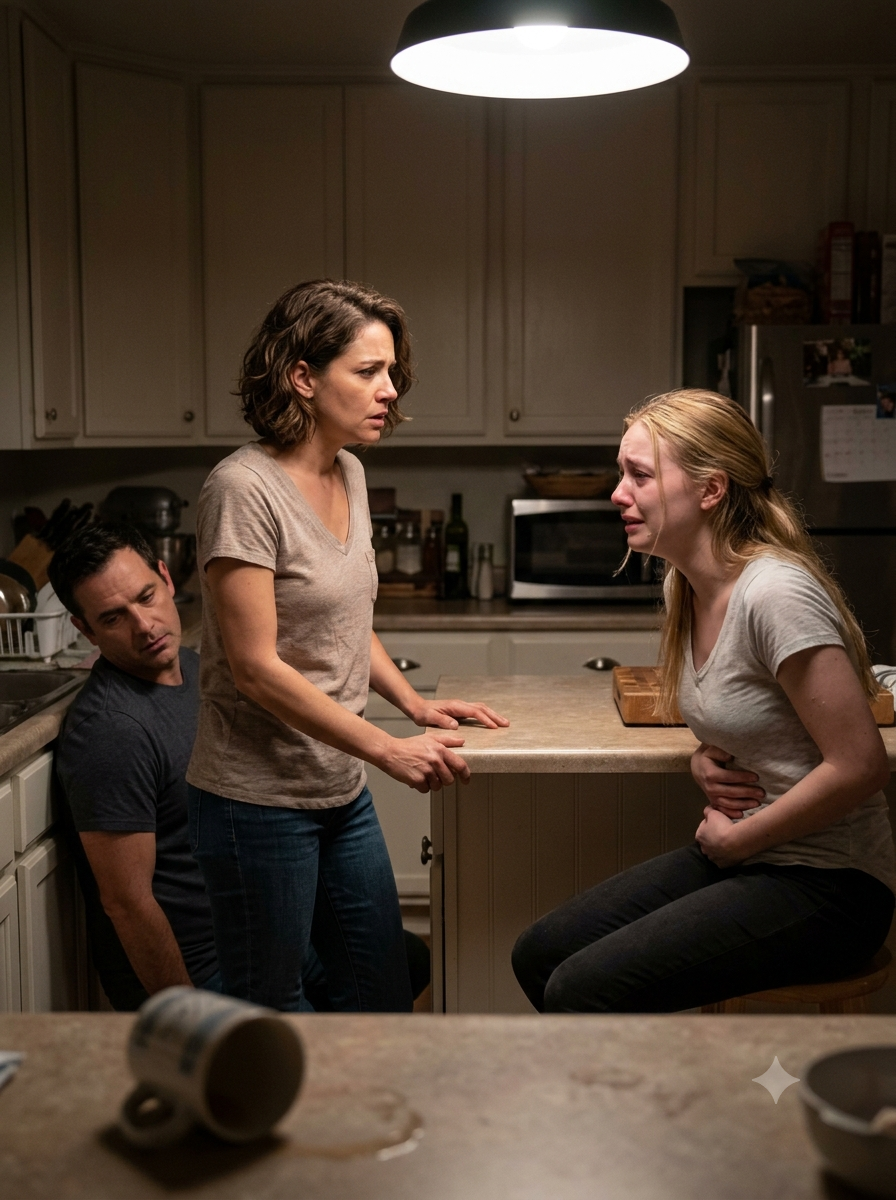
For three months, anger was my constant companion. It fueled me, kept me moving, kept my mind razor-sharp. Every time I pictured them together, my heart hardened further. The betrayal ran deep, but I convinced myself it was necessary armor.
Then, one night, there was a knock on the door. My hand froze on the handle. When I opened it, I barely recognized my sister. Vanessa was slouched, clothes dirty and torn in places, hair tangled and unwashed, face hollow and drained. She trembled—not from the cold outside, but from a fear I couldn’t name.
“I didn’t know where else to go,” she whispered.
I should have slammed the door. My instincts screamed at me. But something stopped me. Compassion? Habit? Perhaps the remnants of the bond we once shared. I stepped aside.
Vanessa walked in like a ghost. She didn’t justify herself. She didn’t plead. She didn’t even look me in the eye. She sat on the couch, clutching her stomach, small and fragile.
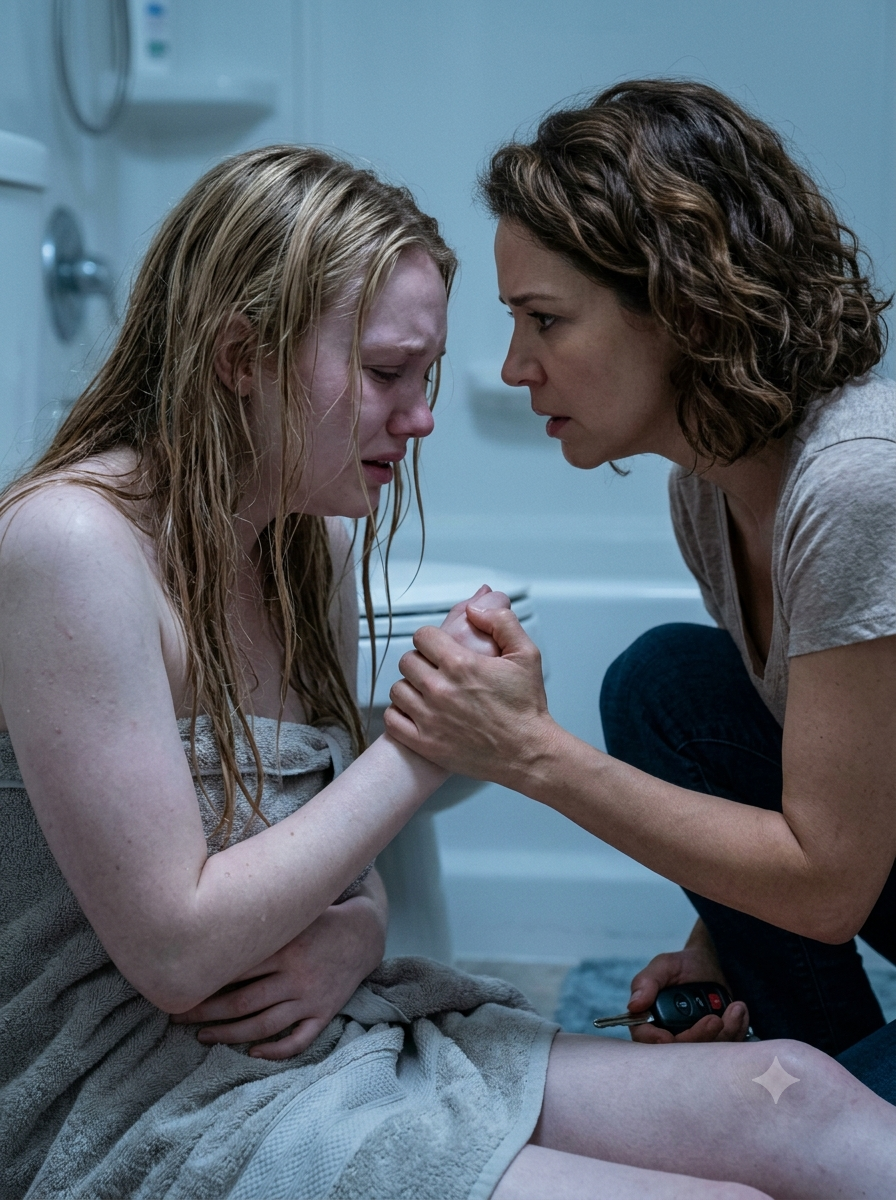
Around midnight, a sharp cry tore through the apartment. It was her, from the bathroom. I ran, heart pounding. She was collapsed on the floor, blood pooling beneath her.
“I’m sorry… I’m sorry…” she kept repeating.
I didn’t think. I acted. I wrapped her in towels, grabbed the keys, and drove her to the hospital, cradling her, answering questions, providing her medical history because I knew it better than she did.
She miscarried.
Exhausted and pale, she finally slept in the hospital bed. I went home to grab clean clothes for her. While washing the ones she had been wearing, I noticed a small, stitched pocket in the lining of her jumper. Curiosity and dread collided in my chest. I opened it carefully.
Inside was a tiny velvet pouch. And within it, a silver baby bracelet, delicate with a pink foot charm. My hands shook as I held it.
Engraved on the bracelet was a single name:
Angela.
My name.
I sat on the edge of the bathtub, the weight of it crashing down on me. Vanessa had planned to name her daughter after me. Despite everything—the affair, the betrayal, the scandal—she had chosen a piece of me for her child.
Suddenly, the story I had been telling myself shattered. Yes, she had betrayed me. But Michael had pursued her, had lied to both of us, had abandoned her when the situation became complicated. He had destroyed us both.
The next morning, I returned to the hospital. Vanessa looked tiny, fragile, and pale.
“You don’t have to stay,” she said, panic in her eyes. “I know you hate me.”
I didn’t respond. I walked over and hugged her.
At first, she froze. Then she broke down completely, sobbing into my shoulder as she used to when we were little girls with nightmares.
“I never wanted to hurt you,” she whispered.
“I know,” I said quietly.
For the first time since the affair was revealed, I felt clarity, not rage. Forgiveness didn’t happen instantly. It wasn’t a sudden, magical erasure of pain. It was a choice. I chose not to let one man’s selfishness destroy two sisters.
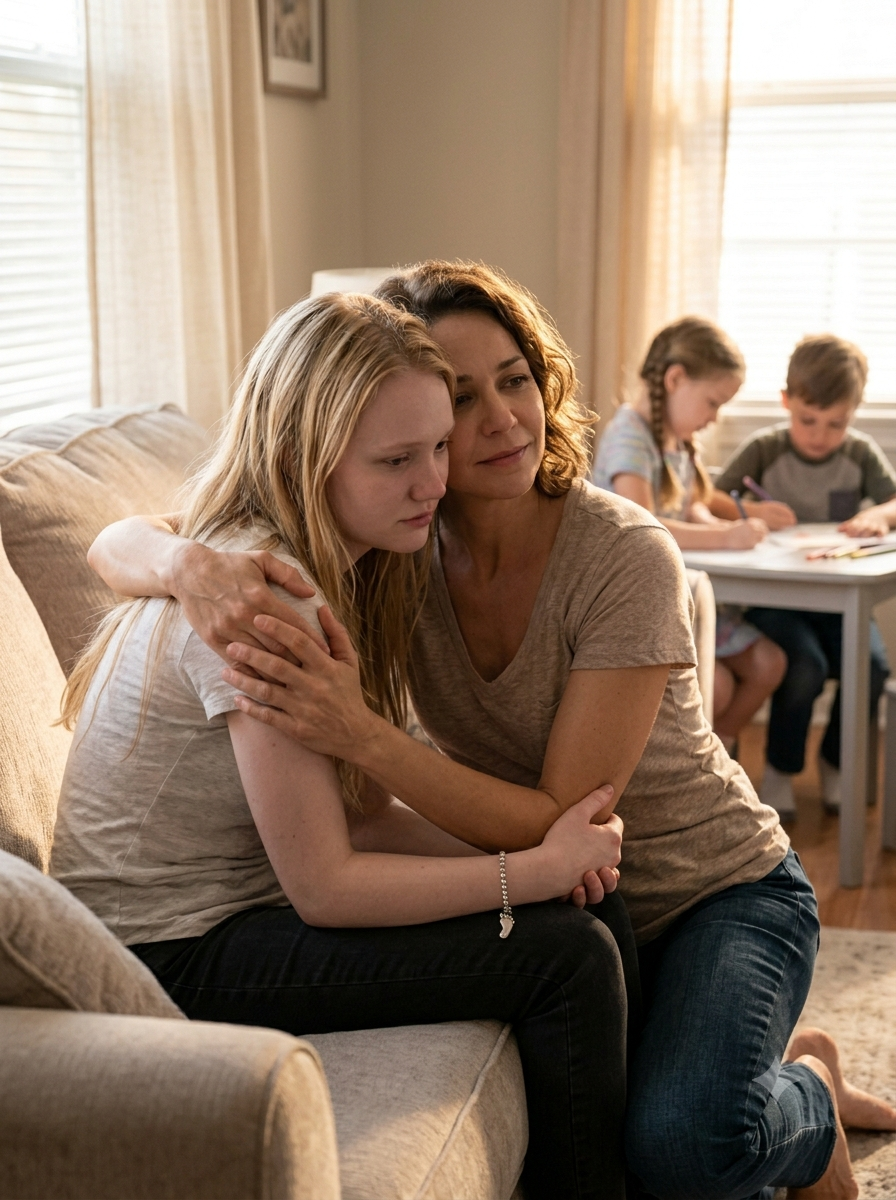
When Vanessa was discharged, I brought her home with me. My children were confused at first. Slowly, she reclaimed her role in our family as “Auntie.” She never demanded attention. She never asked for forgiveness. She just helped. Cooked meals, braided hair, read bedtime stories, cheered at soccer games.
The apartment, once heavy with tension, became warm again. Michael existed only in the background: court papers, supervised visits, memories of betrayal. He no longer controlled the rhythm of our lives.
What I learned is simple but profound: revenge would have been easy. Bitterness would have been justified. But kindness—the pure, messy, deliberate choice to act with compassion—repaired something stronger than any anger ever could.
Vanessa had lost her child. I had lost my marriage. But we didn’t lose each other. And that saved both of us.
