


For an entire year, I worked myself to the bone. Twelve-hour shifts, sometimes fourteen, barely a moment to breathe. My city life was chaotic—rent prices were sky-high, debts piled up, and every week felt like a constant race to manage my own existence. Yet, every month, I faithfully handed my stepmother, Nancy, $2,500 to help cover her care home expenses. I did it willingly. I thought it was necessary. I believed I was protecting her, honoring the woman who had been steadily present throughout my life, who had quietly stepped into the role of “Mom” after my biological mother passed when I was eight years old.
Nancy had never forced me to call her Mom. She never meddled in my life or took my mother’s belongings without asking. She simply showed up, cared, and quietly guided me. Over the years, her presence became natural, almost invisible, until my father passed away. After his funeral, after the legal matters were settled, after the baked meals faded, it was just Nancy and me.
I had hoped that my grief and the weight of responsibility would make me more attentive, more compassionate. But it hadn’t. I was exhausted. I dialed her number, stopped by, yet never felt I had given enough. And then, her health began to decline.
At first, the signs were subtle. She grew tired more quickly, wobbled in the kitchen, fell once and laughed it off. But one day, I noticed a dark bruise on her upper arm. Something cold ran through me. I began researching care options, knowing she despised them. She gave me that calm, reassuring smile she always used to prevent me from panicking.
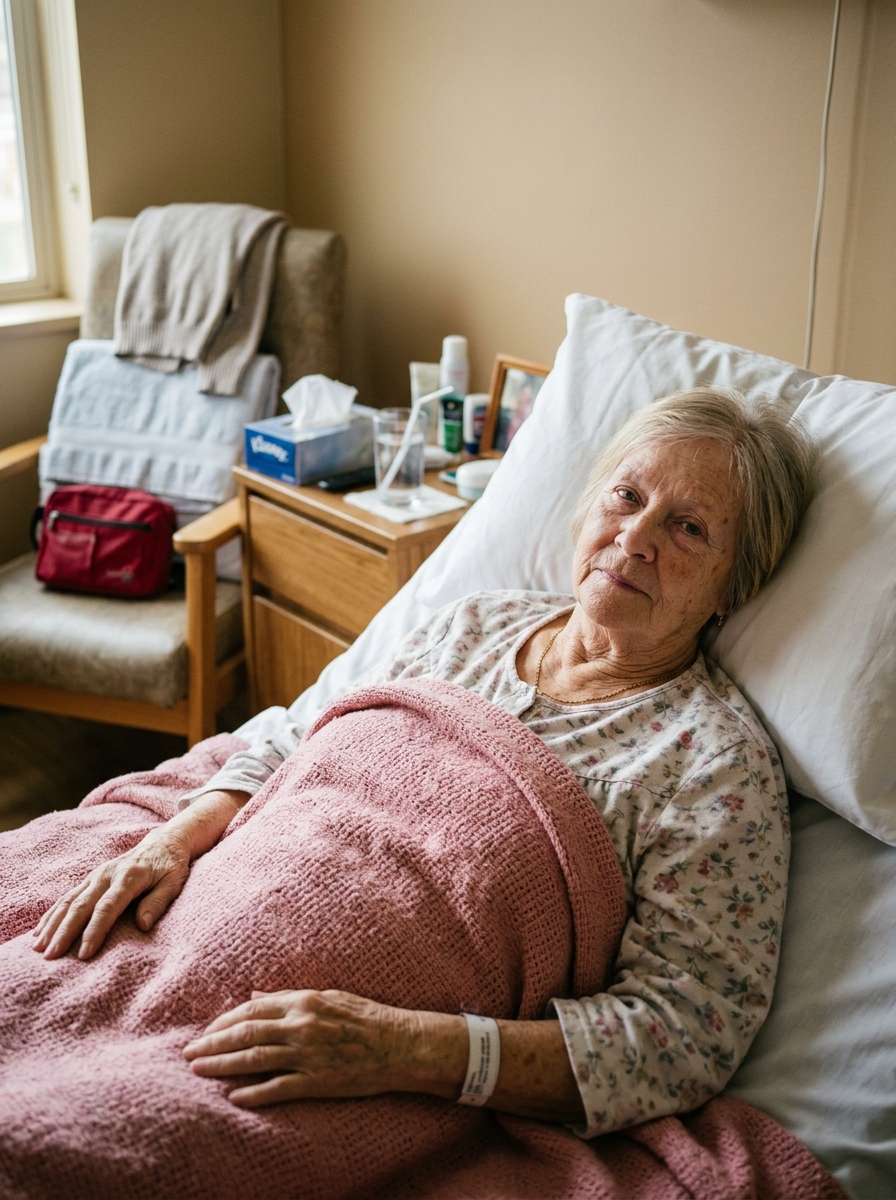
Then, one weekend, she invited me to sit.
“I found a place,” she said, gesturing to a brochure.
I stared. “A place… for what exactly?”
“Residential care,” she replied, calm, collected.
“You toured it without telling me?” I asked, stunned.
“I didn’t want to rush you before you were ready. I wanted the details first,” she said.
“What details?”
She explained that decades earlier, following my sibling’s passing, she had donated a sum to help renovate a part of the building and had even served briefly on its board. Historic members received a discounted rate—$2,500 per month—and she intended to cover part herself.
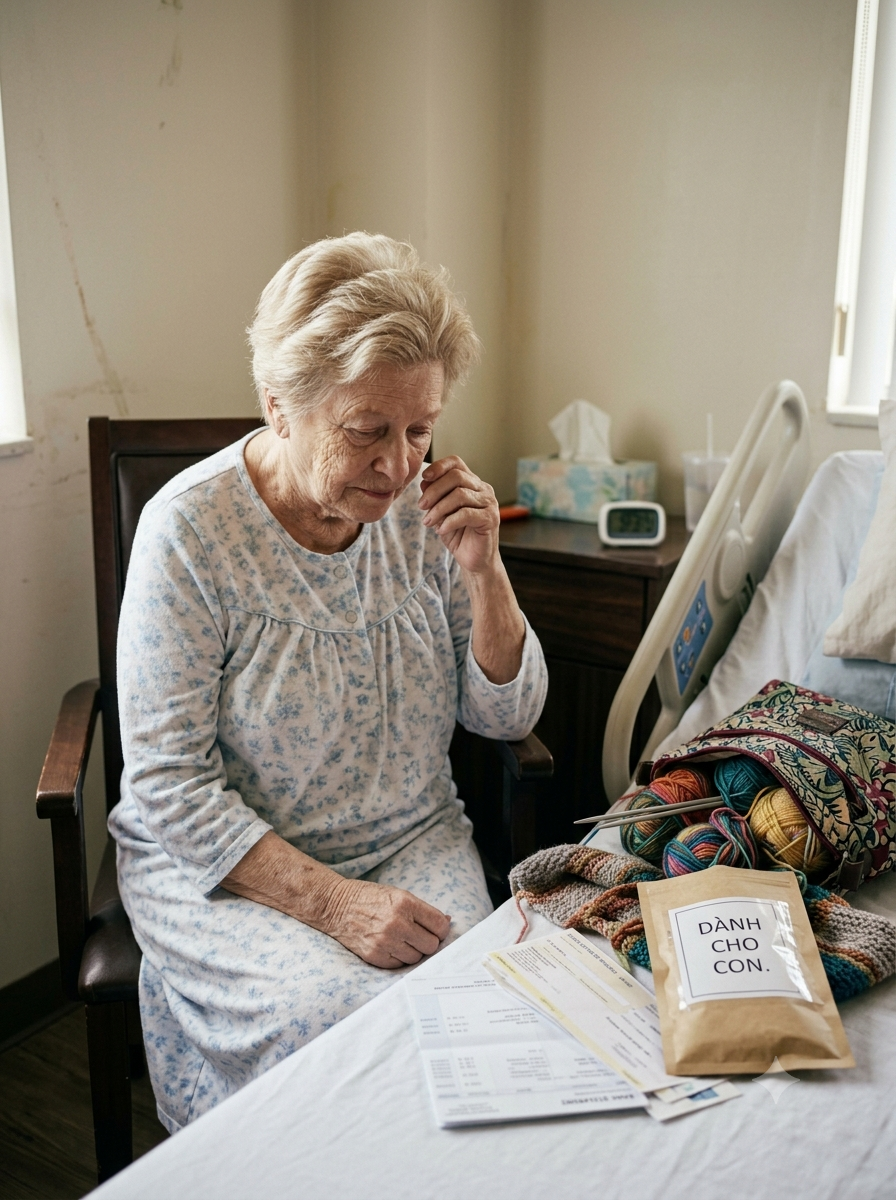
“No,” I said slowly.
“Hear me out—”
“No,” I interrupted. “I’ve been supporting you for decades. I can handle it myself.”
Her eyes welled up.
“You don’t have to. I just… want you to be here.”
That statement, so simple yet so revealing, broke the tension.
What followed was the truth I hadn’t seen. Nancy revealed that the care home’s administration applied the discount automatically. The $2,500 I had faithfully handed over each month? She never touched it. Every cent went directly into a secured account managed independently by the facility. My monthly payments were recorded, tracked, and untouched. My stepmother had orchestrated a carefully controlled illusion, a story to ensure I continued visiting her faithfully, to safeguard her well-being without me questioning her independence.
I froze. The betrayal wasn’t malicious—it was protective, but it left me in disbelief. For twelve months, I had been giving away money unnecessarily, believing I was helping her survive, while the real reason she wanted me there was far simpler: my presence.
I had to sit for a moment, trying to process what I had just witnessed. She had managed everything with precision, ensuring I never missed a single visit, never doubted my role, never let me escape responsibility, yet without ever truly asking for my money. Her ingenuity was exhausting in its subtlety.
Later, when I arrived early, she was speaking with another resident.
“…she firmly believes she is covering my care here. That is the only reason she shows up every month,” Nancy said quietly.
I became motionless. The words cut deeper than any financial misunderstanding ever could.
“Nancy,” the other woman said.
“I know how terrible that sounds,” Nancy replied.
I stayed in the corridor, invisible, letting my mind absorb the truth. When she finally noticed me, she flinched. Our eyes met, and I felt the full weight of every moment, every visit, every dollar—every scrap of time I had devoted to her care.
Inside her room, I demanded clarity:
“Exactly what did you mean?”
“About the payments?” she asked, eyes wide.
“Yes,” I said firmly.
She sank slowly into her chair. The movement alone conveyed the gravity of her own realization.
“Not completely,” she whispered.
I laughed softly, though there was no humor in it. I walked over to her knitting sack and tipped the contents onto the bed—threads, needles, a neck wrap, papers, financial slips, and a small pouch with my printed name. I examined everything carefully. Every payment, every record, every detail was intact. The money I had been giving her? Safe, untouched, meticulously recorded.
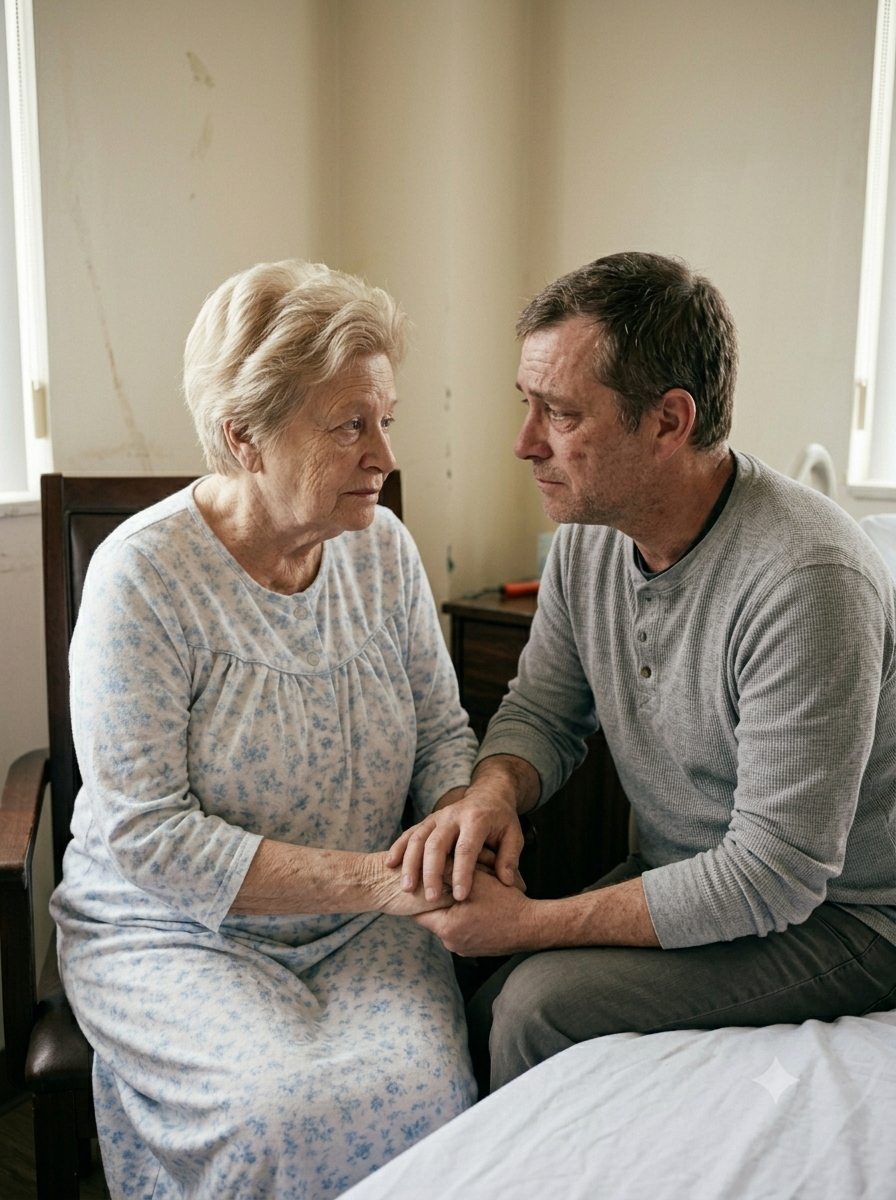
“This… all of it?” I asked, nauseous.
“Yes,” she said, her tone fractured. “It was the only way I knew you would continue showing up.”
She spoke softly, confessing the truth behind each monthly visit. After my father passed, I had been overwhelmed with grief and responsibility. She had seen the toll it took on me and had created this story to ensure I remained present, to maintain my connection without forcing me to negotiate or argue. She wanted me there—not the money.
“You should have just told me,” I said quietly.
“I know,” she replied.
“What you did was wrong,” I said.
“I know,” she whispered.
We sat together for two hours, neither of us speaking much, just holding space for each other. There were no financial exchanges, no explanations left unspoken. Just me and her—present, real, and fully aware of the depth of care and trust between us.
The incident left an indelible mark. It taught me about love, trust, and the lengths someone will go to protect both dignity and connection. It reminded me that the most meaningful acts are often invisible, and that presence—true presence—is far more valuable than any amount of money.
By the end of that day, the fake story had been unraveled, but the bond had been reaffirmed. She never wanted my cash. She wanted my time, my attention, my presence. And in that truth, I found a deeper understanding of family, loyalty, and what it truly means to care.
