

CHAPTER 1 — THE GIRL THEY ALWAYS TREATED LIKE SHE DIDN’T BELONG
For most of my life, I had already been cast as the outsider before I even opened my mouth.
In that family, I was never introduced by my name first, never by my achievements, never by anything that made me feel like I existed on equal ground. I was always “the stepdaughter,” always the quiet one at the edge of the frame, always someone whose presence required explanation or apology.
My mother had died when I was young, and after that everything in my life shifted quietly but permanently, like a house settling after the foundation cracks. My father remarried a woman who spoke in soft smiles and perfect sentences, the kind of woman who never raised her voice because she never needed to.
And with her came her daughter, Diana.
Diana was everything the world seemed to reward without effort. Beautiful in a sharp, practiced way, confident in a way that didn’t come from experience but from certainty that she would never be questioned. She didn’t just enter rooms, she claimed them, and slowly, without anyone ever announcing the decision, I became the person who existed at the margins of whatever life they were building.
It wasn’t that I was openly hated at first.
It was worse than that.
I was dismissed so consistently that it became normal.
If something went wrong, it was assumed to be me.
If Diana cried, I was the cause.
If my father was tired, I was the inconvenience.
And slowly, without anyone ever needing to say it directly, I learned the rules of that house.
Diana was the center.
Her mother shaped the world around her.
My father chose silence over correction because silence was easier than conflict.
And I learned something I never should have had to learn as a child.
That belonging is not always taken from you in one moment, sometimes it is removed slowly until you stop expecting it altogether.
I grew up in that erosion.
Until the day I left.
There was no dramatic final fight that people imagine when they hear stories like this. There was only a moment, ordinary and devastating, where I was told to leave as if I were a mistake that had finally become too visible to ignore.
So I left.
And no one came after me.
That part matters more than anything else.
Because it taught me exactly what I needed to know about where I stood in their world.
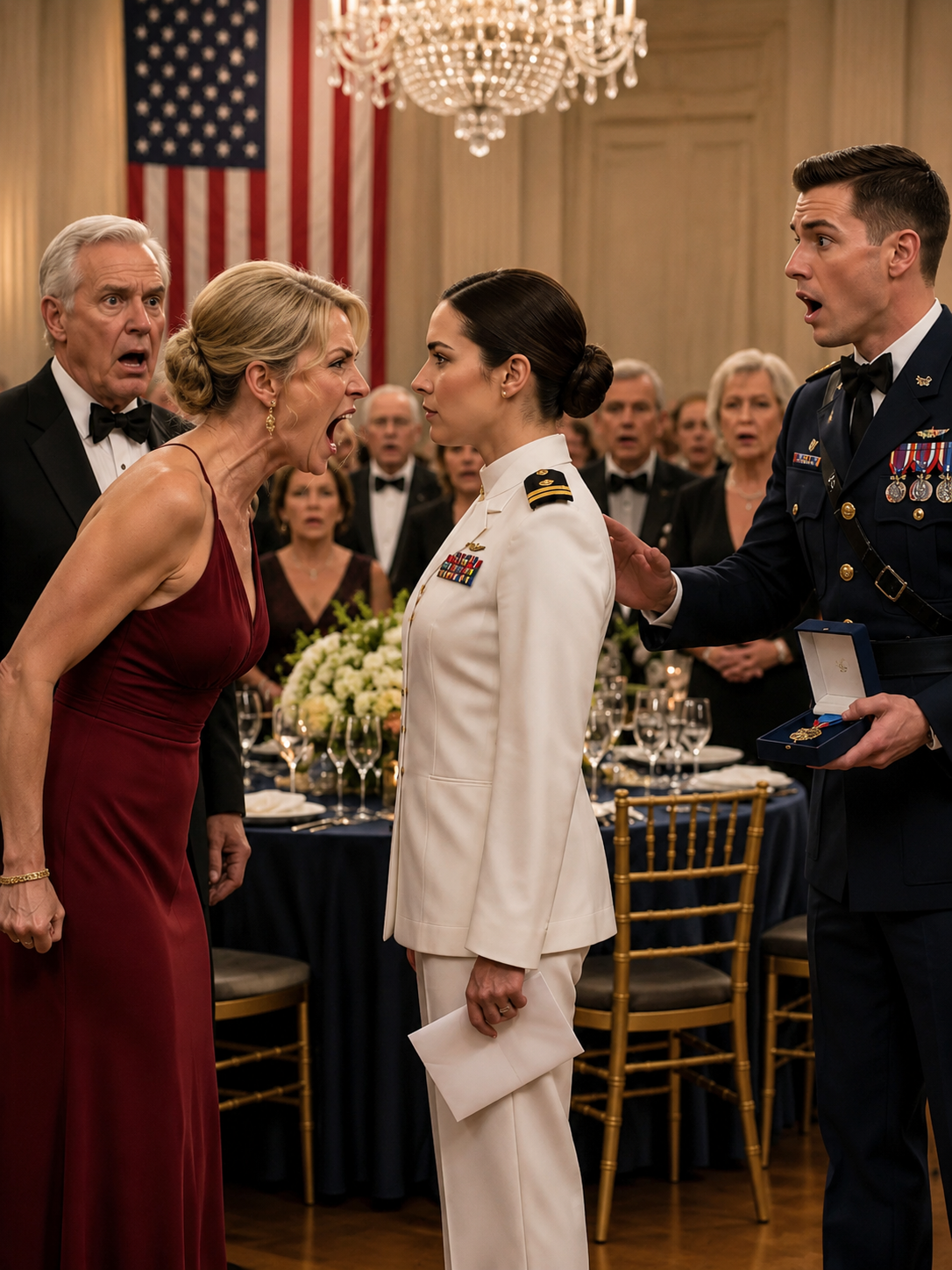
Now years later, I stood at Diana’s wedding as a guest who had not been expected, not wanted, and certainly not understood, watching a version of my family perform happiness for five hundred people who believed they were witnessing something perfect.
I did not come for them.
I came because sometimes you need to see the place that erased you with your own eyes just to confirm you no longer belong to it.
I just did not expect the night to end with my identity being the thing that shattered the room.
CHAPTER 2 — THE SLAP THAT WAS SUPPOSED TO ERASE ME